A reunion dinner is held on the eve of Chinese New Year, when family members gather together to celebrate the occasion. In the past, it was traditionally an evening meal where the whole family sat around the table together. However, due to work schedules and other family commitments, it can now take place at any time of the day, as long as it is held on New Year’s Eve.
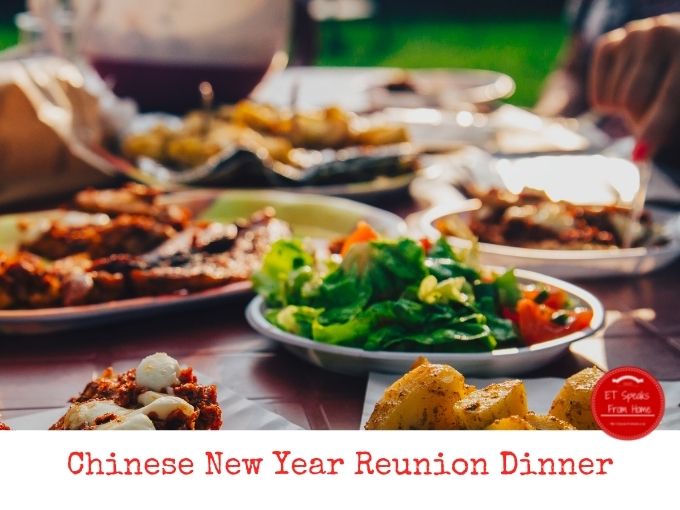
My mum has always been very particular about everyone being home on time and starting the meal at an auspicious hour. Since moving to the UK and starting my own family, I have continued this tradition and hope to pass this culture on to my children as they grow up.
Without fail, we always have a steamboat (hotpot) for our reunion dinner. The table is usually filled with fish topped with spring onions, chicken, pork, roast duck, abalone, seafood, and a wide variety of vegetables. In Chinese culture, having a table overflowing with food symbolises abundance, prosperity, and a life filled with wealth and blessings.
Spring onions played an especially important role in many dishes during my school days. Their Chinese meaning is associated with intelligence and success in studies, so my mum would insist that we eat every last bit of them!
This year, I cooked a variety of dishes including chicken, fish, and vegetables. Fish is always a must-have during the Chinese New Year season because it symbolises 年年有余 (nián nián yǒu yú) — having abundance and blessings every year. Of course, I also added plenty of spring onions as garnish to bring extra good fortune.
After dinner, we gave our children 压岁钱 (ya sui qian), also known as ang bao or red packets. According to Chinese tradition, the money inside should always be an even amount, such as £2, £4, £6, £8, or £10, as odd numbers are considered unlucky. Traditionally, children would place the red packets under their pillows for the 15 days of Chinese New Year to ward off evil spirits and bring good luck.
Later in the evening, everyone would change into new pyjamas or new clothes. Wearing new clothing symbolises a fresh start and a new beginning for the year ahead.
There is also a special Chinese New Year tradition called 守岁 (Shou Sui), where children stay awake past midnight to welcome the New Year. It is believed that staying up late helps to prolong the lives of their parents. In countries where Chinese New Year is officially recognised with public holidays, children are often allowed to stay up well beyond midnight for the celebrations.
Back in Singapore, if you were from a Buddhist family, you might follow your parents to different temples late at night to pray for blessings in the coming year. We usually set off around 11pm and visited several temples before returning home in the early hours of the morning. It was always lively, crowded, and full of festive atmosphere.
Unfortunately, things are quite different here in the UK since Chinese New Year is not a public holiday and we do not live near any temples. Both of my children were fast asleep before 8pm! So instead, my husband and I spent the evening relaxing at home and watching television together.
Still, every Chinese New Year makes me feel a little nostalgic. I truly miss celebrating this festive season in Singapore with all the noise, traditions, delicious food, and family gatherings.
Great insight into the Chinese New Year traditions, it must be hard to be away from your family during the celebration.
a lovely tradition, and a shame we don’t have a couple of bank holidays extra!
Sounds like a lovely tradition! Loving the photos!
sounds like a lot of fun! it is so annoying we can’t get extra days off for our holidays here, feel the same when it’s eid and they only get one day off and have to go back to school the day after!
Oh no! I think I’d have kept my children up anyway if it prolongs my life!! 😀
The t-shirts look brilliant! 🙂